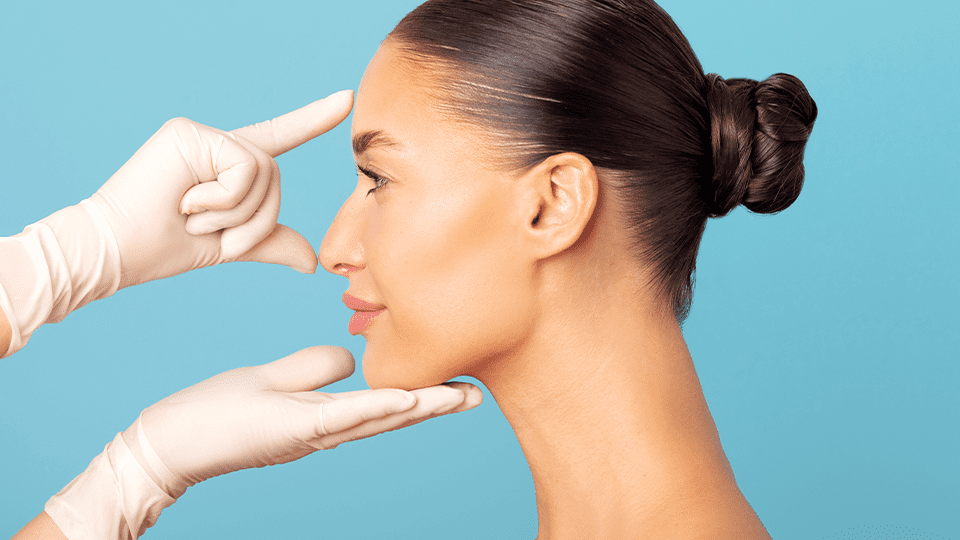
What Is Rhinoplasty (Nose Aesthetic Surgery)?
Rhinoplasty, also known as nose aesthetic surgery, is a surgical procedure performed to improve the shape or function of the nose. This operation is used to correct the size, shape, angle, or other aesthetic and functional issues that need adjustment. Rhinoplasty can be performed either for aesthetic purposes or to address health concerns such as breathing difficulties, or for both reasons simultaneously.
At What Age and to Whom Can Rhinoplasty Be Performed?
Rhinoplasty can be performed on individuals with aesthetic concerns, those who have both functional and aesthetic issues, or patients with purely functional problems. Since the body and its organs continue to develop during childhood, rhinoplasty—like all aesthetic procedures—is generally recommended after the age of 17–18. However, in cases of severe breathing difficulties, congenital deformities, or significant structural or traumatic nasal issues, rhinoplasty may be performed even during childhood.
How Long Does Rhinoplasty Take?
Rhinoplasty is performed under general anesthesia and typically takes about 2 hours. Postoperative pain is usually minimal, and cold compresses are applied to the face on the first day after surgery.
What Is the Recovery Process After Rhinoplasty?
The recovery process after rhinoplasty varies from person to person and cannot be predicted in advance. Following the surgery, bruising, swelling, and edema may occur. During the operation, various surgical techniques, anesthesia methods, and specific measures are used to minimize swelling and edema.
However, the degree of swelling varies depending on the patient’s skin and body type. Cold compresses are applied at regular intervals on the first day after surgery. Typically, swelling does not increase after the second day and gradually begins to decrease day by day. The nose may remain swollen and bruised, but complete resolution can take several weeks. A splint is placed over the nose, and, depending on the case, nasal packing may be used inside. During this period, mild pain, tightness, and discomfort in the nasal area are completely normal. It is important to rest as recommended and maintain the proper sleeping position.
Performing the recommended nasal rinses to keep the airway clear will help patients feel more comfortable. Nasal massage after splint removal is important for reducing swelling. To minimize pressure on the nose, wearing glasses is generally not recommended during the first two months. Physical activities should be limited in the early recovery period, especially high-intensity exercises. Sun protection is crucial during the postoperative healing phase, as sunburns and changes in skin color can negatively affect recovery. Rhinoplasty results are generally long-lasting and permanent.
Final results may take 8–12 months to fully appear. Depending on factors such as wound healing, there is a small possibility that a revision surgery may be needed later in the process.
Secondary (Revision) Rhinoplasty
Revision rhinoplasty is a surgical procedure performed to correct undesirable outcomes from a previous rhinoplasty. This operation aims to address structural issues in the nose and resolve aesthetic or functional problems.
Undesirable changes in the nose may occur after the initial surgery, and these can appear in the early or late stages following the procedure. In revision rhinoplasty, the goal is to correct nasal shape deformities to achieve a better aesthetic appearance. Each patient should be evaluated individually, taking into account the structure, shape, and skin quality of the nose. Additionally, breathing difficulties, nasal obstruction, or other functional problems may arise after the first surgery. Revision rhinoplasty is performed to address these issues and improve nasal function.
When Can Revision Rhinoplasty Be Performed at the Earliest?
It is recommended to wait at least one year after the initial surgery to allow the results to fully settle and to accurately determine the areas that need correction in revision rhinoplasty.
How Long Does Revision Rhinoplasty Surgery Take?
The duration of revision rhinoplasty can range from 1 to 4 hours, depending on the shape of the nose, the procedures to be performed, and the surgical approach. If cartilage grafts are needed from sources other than the septum, such as the ear or rib, the surgery may take longer. Minor revisions typically take 30–60 minutes.
Recovery Time After Revision Rhinoplasty
The recovery process after revision rhinoplasty is generally longer than that of a primary rhinoplasty. This period usually spans several weeks. Bruising and swelling may be noticeable within the first 7–10 days and gradually decrease over time. Healing takes longer because the anatomical structure of the nose has already been affected by previous surgeries. Additionally, the cartilage used in the reconstruction needs time to adapt to its new position, which slows the process. By the end of the first month, the shape of the nose begins to become more defined. By the third month, the nasal contours are clearer, and the aesthetic appearance improves. Full recovery can typically take 12–24 months, so expecting a final result in the early stages can be misleading.